Showing posts with label behavioral economics. Show all posts

Wednesday, January 26, 2011

The "Heart of Economics"

I'm currently teaching a course on "the economics of social problems." It can be a tricky course because I need to communicate to students that, for example, poverty is about more than low income. Its also about opportunities, happiness or well-being, cognitive adaptations (i.e., beliefs) and more.

With this in mind, I found today's piece in the NY Times by Ed Glaeser interesting. He writes:
Teachers of first-year graduate courses in economic theory, like me, often begin by discussing the assumption that individuals can rank their preferred outcomes. We then propose a measure — a ranking mechanism called a utility function — that follows people’s preferences.

But then we turn to welfare, and that’s where we make our great leap.

Improvements in welfare occur when there are improvements in utility, and those occur only when an individual gets an option that wasn’t previously available. We typically prove that someone’s welfare has increased when the person has an increased set of choices.

When we make that assumption (which is hotly contested by some people, especially psychologists), we essentially assume that the fundamental objective of public policy is to increase freedom of choice.

Economists’ fondness for freedom rarely implies any particular policy program. A fondness for freedom is perfectly compatible with favoring redistribution, which can be seen as increasing one person’s choices at the expense of the choices of another, or with Keynesianism and its emphasis on anticyclical public spending.

Thursday, August 26, 2010

Marshmallows and kid's will power

Some cool video of kids, marshmallows, and a test of the time rate of preference!

You-Tube

Wiki

Wednesday, February 3, 2010

Oscar Nomination for Daniel Ellsberg

A documentary film about Daniel Ellsberg (the Most Dangerous Man in America) has been nominated for an academy award in the documentary category. Ellsberg is best known to economists for his work in decision theory and the Ellsberg Paradox.


Wednesday, September 16, 2009

Daniel Ellsberg on Democracy Now


Today, Democracy Now aired an interview with Daniel Ellsberg to discuss the new movie The Most Dangerous Man in America regarding Dr. Ellseberg's work during the Nixon administration and his leaking of Pentagon papers regarding the Vietnam war.

Dr. Ellsberg is know to graduate microeconomics students for his popularizing of what is known as the Ellsberg paradox:

Suppose you have an urn containing 30 red balls and 60 other balls that are either black or yellow. You don't know how many black or yellow balls there are, but that the total number of black balls plus the total number of yellow equals 60. The balls are well mixed so that each individual ball is as likely to be drawn as any other. You are now given a choice between two gambles:

Gamble A Gamble B
You receive $100 if you draw a red ball You receive $100 if you draw a black ball

Also you are given the choice between these two gambles (about a different draw from the same urn):

Gamble C Gamble D
You receive $100 if you draw a red or yellow ball You receive $100 if you draw a black or yellow ball

Since the prizes are exactly the same, it follows that you will prefer Gamble A to Gamble B if, and only if, you believe that drawing a red ball is more likely than drawing a black ball (according to expected utility theory). Also, there would be no clear preference between the choices if you thought that a red ball was as likely as a black ball. Similarly it follows that you will prefer Gamble C to Gamble D if, and only if, you believe that drawing a red or yellow ball is more likely than drawing a black or yellow ball. If drawing a red ball is more likely than drawing a black ball, then drawing a red or yellow ball is also more likely than drawing a black or yellow ball. So, supposing you prefer Gamble A to Gamble B, it follows that you will also prefer Gamble C to Gamble D. And, supposing instead that you prefer Gamble D to Gamble C, it follows that you will also prefer Gamble B to Gamble A.

When surveyed, however, most people strictly prefer Gamble A to Gamble B and Gamble D to Gamble C. Therefore, some assumptions of the expected utility theory are violated.

Tuesday, September 15, 2009

The Economic History of Acting Black (?)


Roland Fryer and David Austen-Smith have a very intriguing article entitled "An Economic Analysis of Acting White" (QJE, 2005). In the article, they document the tension between signaling to the job market and signaling to peers. The simple story is that, for example, you may feel ostracized by peers for doing well on an exam even though this type of good performance may help you in the labor market down the road. When I was in high school, this was an important phenomenon which kept a lot of talented people from doing their best. (My high school had, in my opinion, a very low graduation rate.)

I'm currently reading Elijah Wald's How the Beatles Destroyed Rock and Roll. Wald documents American of popular music in the U.S. (I haven't got to the part where the Beatles wreck things.)

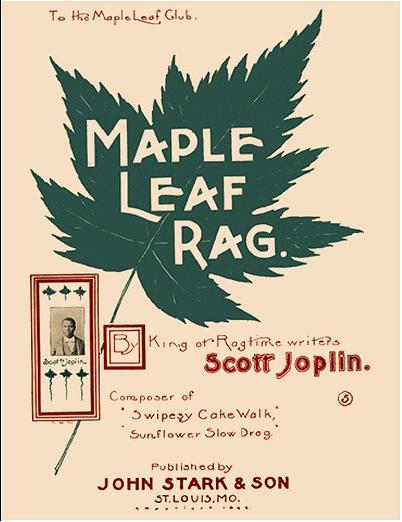
During the ragtime period (ranging from the 1880's through the 1920's depending on what source you look at) composers like Scott Joplin and Kerry Mills wrote dance music that became the foundation of many social dances of the period. This was also an important time for immigration to the U.S. and presented many moves by immigrants to assimilate into American culture. Since European immigrants were coming from a culture that emphasized folk music/dances and had less in common with the white upperclass in the U.S., acting black became a means for new immigrants to fit in socially and become parts of the communities in which they lived. Citing Wald,
Acting black became an ethnic lever, a way for Jews, Irish, and Central and Southern Europeans to assimilate into the white mainstream. (p. 30)

Friday, September 11, 2009

Understanding Neuroeconomics

A friend of mine forwarded me the following video. It features Colin Camerer and Steven Quartz of CalTech explaining the methods and implications of neuroeconomics for our understanding of the emotions, risk taking behavior and our understanding of markets.


Tuesday, September 1, 2009

The Ultimate Veblen Good

Curtis Eaton (here), myself, (here and here) and many others have written on Veblen goods: goods that are valued largely as symbols of social status. Perhaps this is the ultimate Veblen good:
Los Angeles Times (Aug 25, 2009): It was a day of ups and downs when the online bidding ended Monday for the crypt above Marilyn Monroe.
Elsie Poncher, whose husband Richard Poncher is entombed in the crypt at Pierce Brothers Westwood Village Memorial Park, said she wanted to sell it to pay off the more than $1-million mortgage on her Beverly Hills home.
A bidder from Japan appeared to be the winner of the EBay auction, with an offer of $4,602,100 -- $100 more than the next highest bid.
In addition to being above Marilyn Monroe, it was once owned by Joe DiMaggio and the tomb next to it is owned by Hugh Hefner. My favorite quote from the article:
Elsie Poncher, who is in her 70s, plans to move her husband's remains to the crypt designated for her, and when the time comes, she'll be cremated. She said that when her husband was dying, he made a request. "He said, 'If I croak, if you don't put me upside down over Marilyn, I'll haunt you the rest of my life.' "

Wednesday, July 22, 2009

What Do Charles Plott and I Have In Common?

What do Charles Plott and I have in common?

Two articles in the most recent issue of Economic Inquiry.

Friday, June 19, 2009

Economics and Inner Peace

My wife is a yoga instructor and has introduced me to a number of books regarding finding inner peace. I've also recently read a number of music books on finding inner peace while performing and through the writing of music. Now, there is a way to find inner peace using the economic way of thinking:

"The optimal number of lifetime speeding tickets is greater than zero."

One of the great things about being an economist is that you get inner peace by using the EWOT in this way.

Wednesday, June 3, 2009

Research of Twitter

I was forwarded this post by someone who had read my previous comments on Twitter. Although most social networking sites are dominated by women (i.e., women produce most of the content and are followed by men and women):

Although men and women follow a similar number of Twitter users, men have 15% more followers than women. Men also have more reciprocated relationships, in which two users follow each other. This "follower split" suggests that women are driven less by followers than men, or have more stringent thresholds for reciprocating relationships. This is intriguing, especially given that females hold a slight majority on Twitter: we found that men comprise 45% of Twitter users, while women represent 55%. To get this figure, we cross-referenced users' "real names" against a database of 40,000 strongly gendered names.

Even more interesting is who follows whom. We found that an average man is almost twice more likely to follow another man than a woman. Similarly, an average woman is 25% more likely to follow a man than a woman. Finally, an average man is 40% more likely to be followed by another man than by a woman. These results cannot be explained by different tweeting activity - both men and women tweet at the same rate.

What I found more interesting is the "usage distribution" of Twitter:

Twitter's usage patterns are also very different from a typical on-line social network. A typical Twitter user contributes very rarely. Among Twitter users, the median number of lifetime tweets per user is one. This translates into over half of Twitter users tweeting less than once every 74 days. At the same time there is a small contingent of users who are very active. Specifically, the top 10% of prolific Twitter users accounted for over 90% of tweets. On a typical online social network, the top 10% of users account for 30% of all production.... This implies that Twitter's resembles more of a one-way, one-to-many publishing service more than a two-way, peer-to-peer communication network.

Thursday, May 28, 2009

Drinking Behavior and Fraternity Membership


There's an interesting new paper by Jeff DeSimone in Economic Inquiry. The abstract:

This paper estimates the impact of fraternity and sorority membership on a wide array of drinking outcomes among respondents to four Harvard College Alcohol Study surveys from 1993 to 2001. Identification is achieved by including proxies for specific types of unobserved heterogeneity expected to influence the relationship. These include high school and parental drinking behaviors to account for time-invariant omitted factors and assessed importance of drinking-related activities and reasons for drinking to control for changes in preferences since starting college. Because self-selection is quantitatively important, I further hold constant variables plausibly affected by fraternity membership, such as current alcohol use categorization, ranging from abstainer to heavy drinker, and time spent socializing. Even in the fully saturated model, fraternity membership significantly increases drinking intensity, frequency, and recency, as well as the prevalence of many deleterious drinking consequences that potentially carry negative externalities.
Given my interests in the role of social identities in decision making, I wonder how much joining a fraternity changes one's identity (an identity with the potential behavioral prescription involving heavy (or heavier) drinking). I find it interesting that the results still hold given a full accounting of selection effects (i.e., potential drinkers may be more likely to join a frat). Is it that joining a frat changes fundamental behavior? Is it that a frat just provides more opportunities to drink?

Thursday, May 21, 2009

Cellphones and Driving

Alberta is considering following several other provinces (NS, ON, QC) in banning the use of cellphones while driving. I personally think its a good idea, but my experience involves seeing several friends have accidents while on their phones.

I'm curious as to how such a change in legislation will affect accidents via changes in behavior. With respect to seat belts, some have argued that the reduction in risk presented by a seat belt is compensated for by increases in speed and other increases in risky driving behavior (something called risk compensation). I came up with a couple of (back of the envelope) competing hypotheses on the cellphone ban:
  1. Banning cellphone use may result in people paying closer attention to their driving, thereby reducing accidents.
  2. Banning cellphone may result in people increasing their speed, perhaps driving more recklessly in order to get home or to the office to make their calls.
Any other hypotheses are welcomed. Once I have enough hypotheses, I'll look into setting up a track and renting some go-karts.

Wednesday, May 6, 2009

Time Spent Eating and Obesity

A new post by Catherine Rampell at the NYT's Economix blog identifies a relationship between obesity rates and the amount of time individuals spend eating. The amount of time spent eating may be a sign of the amount of "fast food" (which is typically high in fats) consumed. Interestingly, it may not be the smoking and the wine drinking that keeps the French so healthy; it may just be the time spent eating (as a signal of the types of food they eat). Before you start changing your lifestyle by taking longer to eat and enjoying a cigarrette, recall the caveats regarding correlation versus causation.


Friday, March 13, 2009

Happiness and Well-Being by U.S. State


The new Gallup-Healthways Well Being index is available. The index is an attempt to “measure what it is that people believe constitutes a good life, who is feeling good about life, and who is in need of a helping hand,” and has 6 sub-scales: life evaluation, emotional health, physical health, healthy behavior, work environment and basic access.

Here are a few interesting facts about well-being in the U.S.:
  1. People in Utah report the highest levels of well-being; Wes Virginia the lowest.
  2. There is only a small (but statistically significant) positive relationship between median income and well-being.
  3. My home state (California) falls behind Wyoming and Utah.
  4. In terms of healthy behavior (one of the many reports you can generate from the survey's web page) is lowest in the southern states.
  5. In terms of emotional health, those states closest to the Canadian border score higher than do those in the south.

The Canadian Institute for Advanced Research has a group that studies well-being and happiness.

Wednesday, March 4, 2009

Symbols of Economic Recovery


I've always been interested in how symbols affect judgment and decision making. From a marketing perspective, that's the whole game. If you think back to the Great Depression, the National Recovery Agency (the NRA) had a logo. The logo had a blue eagle (a symbol of strength, the U.S.'s national bird) holding a gear (a symbol of industrialism). The red, white and blue of the poster further tied the NRA directly to the U.S. The logo was displayed in various businesses. Businesses not displaying the logo were often boycotted. By most measures, it was a successful marketing campaign (and a largely successful recovery).

So now we have a new recovery effort in the U.S., and a new logo. The Obama administration, in an effort to maintain transparency regarding the stimulus measures taken, has set up a new web site which has a new logo. The logo displays a portion of the US flag, along with a gear (industrialism) and a leaf (agriculture, maybe green technology). We'll see how things play out and how the logo comes to represent the recovery effort. Only time will tell if this is as good of marketing as that used by the NRA.

Sunday, March 1, 2009

Thrift Stores and the Recession

As people start grappling with the recession, they look for means of saving money. This usually means cutting back on purchases and holding on to items a bit longer than maybe one would in more abundant times.

As a result of this behavior, thrift stores in Calgary (and elsewhere) are feeling a pinch. Paraphrasing from an article in the Calgary Herald (March 1 2009):

Calgary's social agencies are issuing calls for donations of household items as the recession begins to pinch city residents.

"We've noticed that people are not going out and buying new things; they're hanging onto what they have," said Sparrow. "We're also seeing new faces in our stores." At the same time, the agency has experienced a 20 per cent increase in demand for its Free Goods Referral program. Women in transition or coming out of a crisis are referred to the program by one of 60 community agencies and provided a voucher to obtain clothing and household items at a Women In Need thrift store. Sparrow's organization especially needs dishes, pots and pans, linens, flatware, as well as clothing and accessories, she said. Its Dover-area store also takes furniture. "We're hoping that when people start thinking about spring cleaning, they think about us and donate," said Sparrow.

It's an about-face from the boom, when thrift stores struggled to cope with a flood of donations. Some turned donors away and a few hired security guards to prevent people from dumping unwanted goods on their doorsteps.

Beth Heyd, operations manager of The Salvation Army's Thrift Stores, estimates donations of household goods have dropped by half. Normally, there'd be a dozen sofas in the furniture section of the Salvation Army's Horizon Heights stores at 36th Street and 32nd Avenue N. E., she said, but only one or two couches were available on Thursday. "My theory is that you'll give second thought to buying that new sofa if you're worried about getting laid off," said Heyd. Donations of used clothing remain strong, but she's noticed an increase in professionals, especially women, shopping for used business wear at the thrift stores.

Likewise, the Calgary Drop-In and Rehab Centre put out a call for donations of linens for the 2,000 homeless people who pass through its doors every day. "We are in desperate need of towels and blankets," said Louise Gallagher, director of public relations and volunteer services for the drop-in centre.

My wife and I did a big clean out of our closets today, taking several bags of clothing to a local thrift store. Next time you're struggling to get through your closet, think about doing the same.

Tuesday, February 17, 2009

Economics Photo of the Week (March 2)


John Maynard Keynes & Henry Morgenthau in 1944 at the monetary conference that spawned the idea of the World Bank.

Monday, November 10, 2008

Women in the Economics Profession

It's no secret that women are underrepresented in the economics profession. Part of this, as has been pointed out by many, is a selection story: women aren't attracted to the economics profession the way men are. However, Christian Zimmerman, who runs the RepEc service, posted the following:

Women have always been underrepresented in Economics. For example, regarding US faculty, the Committee on the Status of Women in the Economics Profession (CSWEP), a subcommittee of the American Economic Association, determines in its latest annual report that women represent 28% of assistant professors, 21% of associate professors and 8% of full professors in PhD granting Economics department. As a whole, they represent 19% of all Economics faculty.

The point of this post is not to complain about the low proportion of women in the profession, or about their dwindling share up the ladder, but about the lack of involvement on women in RePEc. Currently, their share is at 14.5%. It is clearly below the 19% mentioned, although it is slowly increasing (it was 13.6% a year ago and 12.7% two years ago). Why this underrepresentation?

Friday, October 24, 2008

Halloween Economics


With Halloween approaching, I thought it might be fun to bring to your attention a new paper by Dean Karlan et al. This is a great paper on an important and interesting field experiment.

In the paper, the authors discuss and experiment conducted on Halloween 2007 in which they had trick-or-treaters (you know the kids who show up at your door asking for candy) to choose from an ambiguous urn of types of candy or an urn in which the distribution of candy types was known. Here's the abstract:

We examine whether ambiguity aversion correlates with costume choice amongst children at Halloween. We conducted an ambiguity aversion experiment with children on Halloween during trick-or-treating and correlated this with their choice of costumes. We find that children wearing the most commonly chosen costumes are more likely to avoid a gamble with ambiguous odds. This inquiry is in line with a series of recent papers observing whether choices in simple experimental economics games correlate with theoretically similar non-laboratory behavior.
They actually conducted two experiments, but the second one resulted in such a long queue outside one of the author's house that it proved infeasible. In the results section, they discuss a number of kids who particpated in the experiment but were not wearing costumes. Who shows up to go trick-or-treating without a costume? Maybe you forget a bag or something to carry your Halloween bounty in, but no costume? Which brings up the other question, who gives kids with no costume a treat on Haloween? If they don't have a costume, aren't they chaperones? I usually offer the adults in this "trick-or-treaters" a choice between an urn with an ambiguous distribution of beer or known candy. When given this type of offer, they display no ambiguity aversion.


The complete paper is available here.

Monday, September 15, 2008

The Marginal Cost of Eggs

Over the weekend, I had breakfast at Chris' Cafe in Coleman, Alberta. The two-egg Denver omelet cost $7.75. The three-egg version costs $7.95. That's $0.20 for the marginal egg. At that price, you're losing money not getting the third egg!