Showing posts with label status seeking. Show all posts

Tuesday, October 19, 2010

Countersignalling and the genius of John Cage

There's a paper by Kim-Sau Chung and Peter Eso on signaling when an individual has career concerns. This paper has been around for a couple of years, but this is the first time I saw it applied to music and particularly John Cage's 4'33". From Jeff Ely's Cheap Talk blog on economics and more:

Which type of artist debuts with obscure experimental work, the genius or the fraud? Kim-Sau Chung and Peter Eso have a new paper which answers the question: it’s both of these types.

Suppose that a new composer is choosing a debut project and he can try a composition in a conventional style or he can write 4’33″, the infamous John Cage composition consisting of three movements of total silence. Critics understand the conventional style well enough to assess the talent of a composer who goes that route. Nobody understands 4’33″ and so the experimental composer generates no public information about his talent.

There are three types of composer. Those that know they are talented enough to have a long career, those that know they are not talented enough and will soon drop out, and then the middle type: those that don’t know yet whether they are talented enough and will learn more from the success of their debut. In the Chung-Eso model, the first two types go the experimental route and only the middle type debuts with a conventional work.

The reason is intuitive. First, the average talent of experimental artists must be higher than conventional artists. Because if it were the other way around, i.e. conventional debuts signaled talent then all types would choose a conventional debut, making it not a signal at all. The middle types would because they want that positive signal and they want the more informative project. The high and low types would because the positive signal is all they care about.

Then, once we see that the experimental project signals higher than average talent, we can infer that it’s the high types and the low types that go experimental. Both of these types are willing to take the positive signal from the style of work in exchange for generating less information by the actual composition. The middle types on the other hand are willing to forego the buzz they would generate by going experimental in return for the chance to learn about their talent. So they debut conventionally.

Now, as the economics PhD job market approaches, which fields in economics are the experimental ones (generates buzz but nobody understands it, populated by the geniuses as well as the frauds) and which ones are conventional (easy to assess, but generally dull and signals a middling type) ?

If you're not familiar with John cage's famous piece, here's a rendition of it:


If you haven't read the Cheap Talk blog before, its worth checking out. Also, Jeff Ely's web page has a great version of the classic Asteroids game.

Tuesday, September 15, 2009

The Economic History of Acting Black (?)


Roland Fryer and David Austen-Smith have a very intriguing article entitled "An Economic Analysis of Acting White" (QJE, 2005). In the article, they document the tension between signaling to the job market and signaling to peers. The simple story is that, for example, you may feel ostracized by peers for doing well on an exam even though this type of good performance may help you in the labor market down the road. When I was in high school, this was an important phenomenon which kept a lot of talented people from doing their best. (My high school had, in my opinion, a very low graduation rate.)

I'm currently reading Elijah Wald's How the Beatles Destroyed Rock and Roll. Wald documents American of popular music in the U.S. (I haven't got to the part where the Beatles wreck things.)

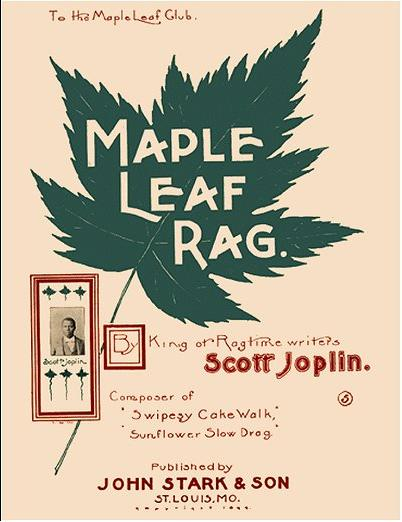
During the ragtime period (ranging from the 1880's through the 1920's depending on what source you look at) composers like Scott Joplin and Kerry Mills wrote dance music that became the foundation of many social dances of the period. This was also an important time for immigration to the U.S. and presented many moves by immigrants to assimilate into American culture. Since European immigrants were coming from a culture that emphasized folk music/dances and had less in common with the white upperclass in the U.S., acting black became a means for new immigrants to fit in socially and become parts of the communities in which they lived. Citing Wald,
Acting black became an ethnic lever, a way for Jews, Irish, and Central and Southern Europeans to assimilate into the white mainstream. (p. 30)

Tuesday, September 1, 2009

The Ultimate Veblen Good

Curtis Eaton (here), myself, (here and here) and many others have written on Veblen goods: goods that are valued largely as symbols of social status. Perhaps this is the ultimate Veblen good:
Los Angeles Times (Aug 25, 2009): It was a day of ups and downs when the online bidding ended Monday for the crypt above Marilyn Monroe.
Elsie Poncher, whose husband Richard Poncher is entombed in the crypt at Pierce Brothers Westwood Village Memorial Park, said she wanted to sell it to pay off the more than $1-million mortgage on her Beverly Hills home.
A bidder from Japan appeared to be the winner of the EBay auction, with an offer of $4,602,100 -- $100 more than the next highest bid.
In addition to being above Marilyn Monroe, it was once owned by Joe DiMaggio and the tomb next to it is owned by Hugh Hefner. My favorite quote from the article:
Elsie Poncher, who is in her 70s, plans to move her husband's remains to the crypt designated for her, and when the time comes, she'll be cremated. She said that when her husband was dying, he made a request. "He said, 'If I croak, if you don't put me upside down over Marilyn, I'll haunt you the rest of my life.' "

Thursday, August 7, 2008

Veblen Effects and Status Seeking


Thorstein Veblen argued that individuals have an innate desire to signal their wealth (and thereby obtain social status). In our department, both Curtis Eaton and I have done research on how this type of status seeking can affect behavior and economic outcomes. That said, I don't think either of us thought it would look like this:


Yesterday developer Armin Heinrich posted an iPhone app to the App Store called I Am Rich. The program displays a red gem, has no function but to display your wealth to others through ownership, and costs $1000.


Here's the complete post. (HT to Tyler Cowen.)